Spaghetti Carbonara

Oh, spaghetti carbonara! Just the thought of it makes my heart do a little happy dance. This isn’t just pasta; it’s pure comfort in a bowl, a dish that instantly transports me back to my Nonna’s kitchen, the air thick with the scent of garlic and simmering goodness. I remember as a kid, seeing her transform simple ingredients into this creamy, dreamy masterpiece. It always felt like magic. When I first tried to recreate it myself, I was a bit intimidated, expecting some fancy, complicated process. But let me tell you, the real deal is surprisingly straightforward, and once you get the hang of it, it’s one of those lifesavers on busy weeknights that feels utterly indulgent. It’s like the sophisticated cousin to a simple mac and cheese, but with an elegance that truly shines. If you’ve ever had those bland, watery versions that disappoint, prepare to be amazed. This is the spaghetti carbonara you’ve been dreaming of.
What is Spaghetti Carbonara?
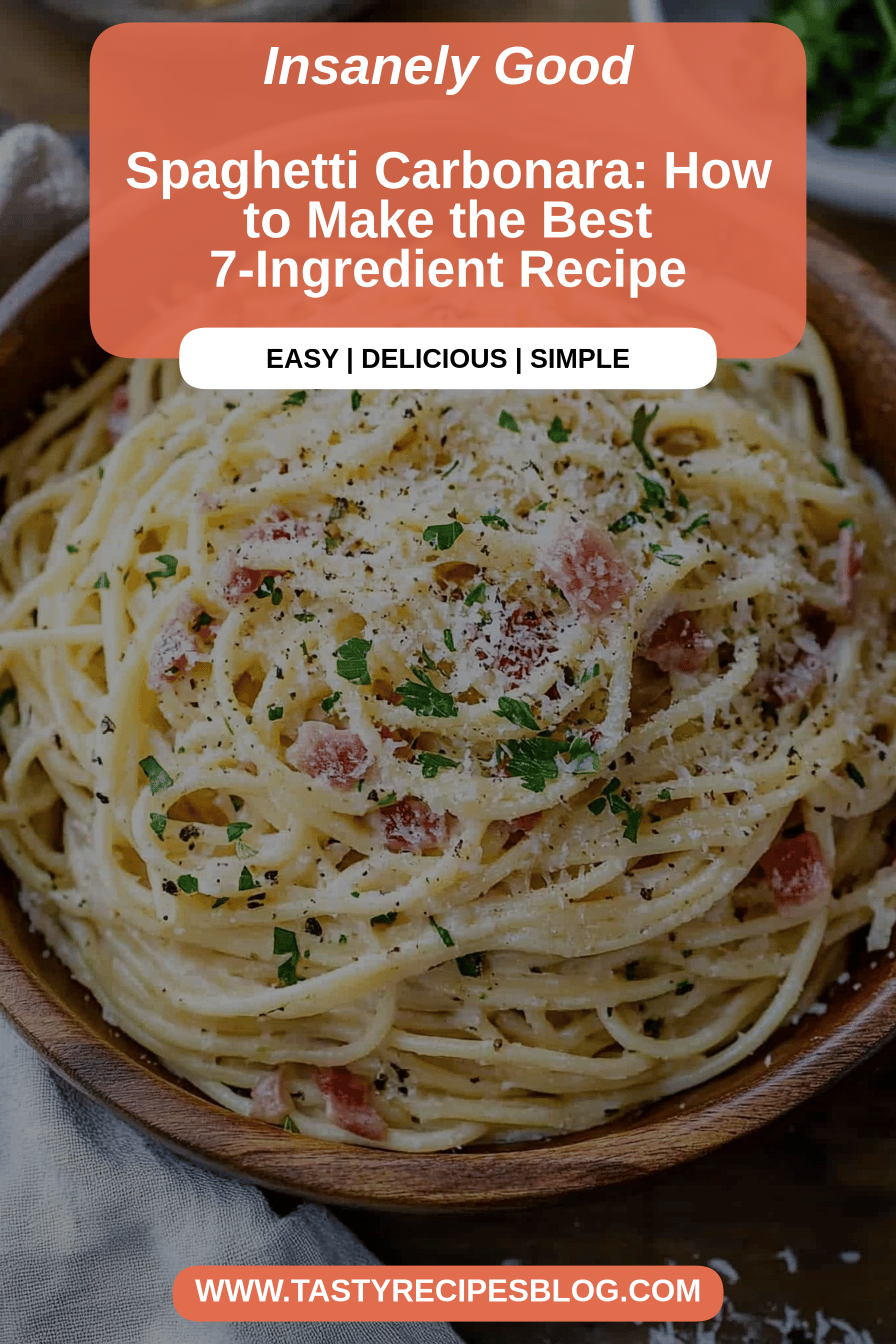
So, what exactly *is* spaghetti carbonara? At its heart, it’s a Roman pasta dish that’s celebrated for its incredibly rich flavor derived from just a few humble ingredients. Forget cream, folks! The magic happens when you combine the richness of eggs and Pecorino Romano cheese with the rendered fat from guanciale (or pancetta if you can’t find guanciale), all emulsified with a little bit of the starchy pasta water. Think of it as a luxurious sauce that coats every strand of spaghetti, creating a silky texture that’s utterly addictive. It’s not just about mixing ingredients; it’s about technique and timing, creating a beautiful harmony of flavors and textures. It’s simple, yes, but that simplicity is precisely where its brilliance lies. It’s a testament to how beautiful food can be when you respect the ingredients.
Why you’ll love this recipe?
What are some of the reasons why I have a recipe for spaghetti carbonara in my binder?flavor is just out of this world. That salty, savory punch from the guanciale and Pecorino Romano, combined with the creamy richness of the eggs – it’s a flavor combination that’s hard to beat. It’s deeply satisfying without being heavy, which is a tricky balance to strike. Then there’s the simplicity. Honestly, once you nail the technique, you can whip this up in about 20 minutes, making it perfect for those evenings when you’re craving something delicious but don’t have a ton of time. It feels so fancy, yet it’s so accessible. And let’s talk Cost-efficiency: What is the best way to measure cost-efficiency?! While guanciale might seem a bit of a splurge, a little goes a long way, and the eggs and Pecorino are relatively inexpensive. Compared to ordering in, this is a fraction of the price for an equally (if not more!) satisfying meal. What I love most about this recipe, though, is its versatility, even within its classic framework. You can adjust the amount of cheese, the richness of the egg yolk mixture, or even the spice level with a pinch of red pepper flakes if you like a little heat. It’s a dish that tastes sophisticated enough for a dinner party but comforting enough for a Tuesday night. It’s truly the best of all worlds.
How to Make Spaghetti Carbonara
Quick Overview
Making a truly great spaghetti carbonara is all about a few key steps: crisping up your cured pork, cooking your pasta to al dente perfection, and then creating a luscious, creamy sauce using the residual heat of the pasta and a magical emulsification of eggs, cheese, and pasta water. It’s a quick process, usually done in under 20 minutes from start to finish. The key is having everything prepped and ready to go, as the final steps happen fast. Don’t be scared by the simplicity; the technique is straightforward and yields spectacular results every single time.
Ingredients
This is where the magic begins! The beauty of carbonara is its minimal ingredient list, so using quality matters. Here’s what you’ll need:
For the Main Dish:
* Spaghetti: 1 pound (about 450g) – go for a good quality, bronze-cut spaghetti if you can. It holds sauce so much better!
* Guanciale: 6 ounces (about 170g), cut into small lardons (about ¼-inch thick). This is cured pork jowl, and it’s traditional. If you absolutely can’t find it, good quality pancetta (not smoked bacon!) is your next best bet.
* Eggs: 2 large whole eggs plus 2 large egg yolks. The yolks are key for that creamy, dreamy texture. I’ve found using just whites can make it a bit too eggy and less rich.
* Pecorino Romano Cheese: 1 cup (about 100g), finely grated, plus more for serving. This is a hard, salty sheep’s milk cheese that is essential for authentic carbonara flavor. Don’t substitute with Parmesan if you can help it – Pecorino Romano has a unique tang.
* Black Pepper: Freshly cracked, to taste. This is your “carbon” – the black pepper. Be generous!
* Salt: For the pasta water. You won’t need much extra salt due to the guanciale and Pecorino.
* Reserved Pasta Water: About 1 cup, for emulsifying the sauce.
Step-by-Step Instructions
Step 1: Preheat & Prep Pan
Get a large pot of water boiling for your spaghetti. Make sure it’s a big pot so the pasta has room to swim and cook evenly. Once it’s at a rolling boil, generously salt it – it should taste like the sea! While the water heats up, take a large skillet (big enough to hold all your pasta later) and place your diced guanciale in it. You don’t need to add any oil; the guanciale will render its own delicious fat. Put it over medium-low heat. We want to slowly render out that fat and get the guanciale crispy, not burnt. This usually takes about 8-10 minutes. Keep an eye on it and stir occasionally. Once it’s beautifully golden and crisp, use a slotted spoon to remove the guanciale pieces and set them aside on a plate lined with a paper towel. Leave that glorious rendered fat in the skillet – it’s liquid gold!
Step 2: Mix Dry Ingredients
In a medium bowl, whisk together your whole eggs and extra egg yolks until they’re nicely combined. Then, add your finely grated Pecorino Romano cheese and a very generous amount of freshly cracked Black Pepper. I mean, really go for it with the pepper. This is where the “carbon” in carbonara comes from, and it adds such a fantastic bite. Whisk this mixture vigorously until it forms a thick, paste-like consistency. It might look a bit clumpy, and that’s totally fine. This is your flavor base!
Step 3: Mix Wet Ingredients
This step is more about preparing your sauce base. The “wet ingredients” here are really the eggs, cheese, and pepper you just combined, along with the crucial element that comes later: the pasta water. The key is to have this egg and cheese mixture ready to go *before* your pasta is done cooking. You want everything to come together seamlessly.
Step 4: Combine
Once your pasta water is boiling, add your spaghetti. Cook it according to the package directions, but aim for *al dente* – tender but still with a slight bite. This is super important because the pasta will continue to cook slightly when you toss it with the sauce. About a minute before your pasta is done, carefully scoop out about 1.5 cups of the starchy pasta water. This starchy water is your secret weapon for creating a silky, emulsified sauce. Now, drain the pasta quickly (but don’t rinse it!). Immediately add the drained spaghetti directly into the skillet with the rendered guanciale fat. Toss it around to coat the pasta evenly in that flavorful fat. This is where the magic starts to happen!
Step 5: Prepare Filling
The “filling” in carbonara is essentially the rich egg and cheese mixture you prepared in Step 2. It’s not a separate component you stuff into anything, but rather the creamy element that binds everything together. The key to success here is having the right ratio of eggs to cheese and ensuring the mixture isn’t too thick or too thin. The cheese and pepper will help thicken it naturally.
Step 6: Layer & Swirl
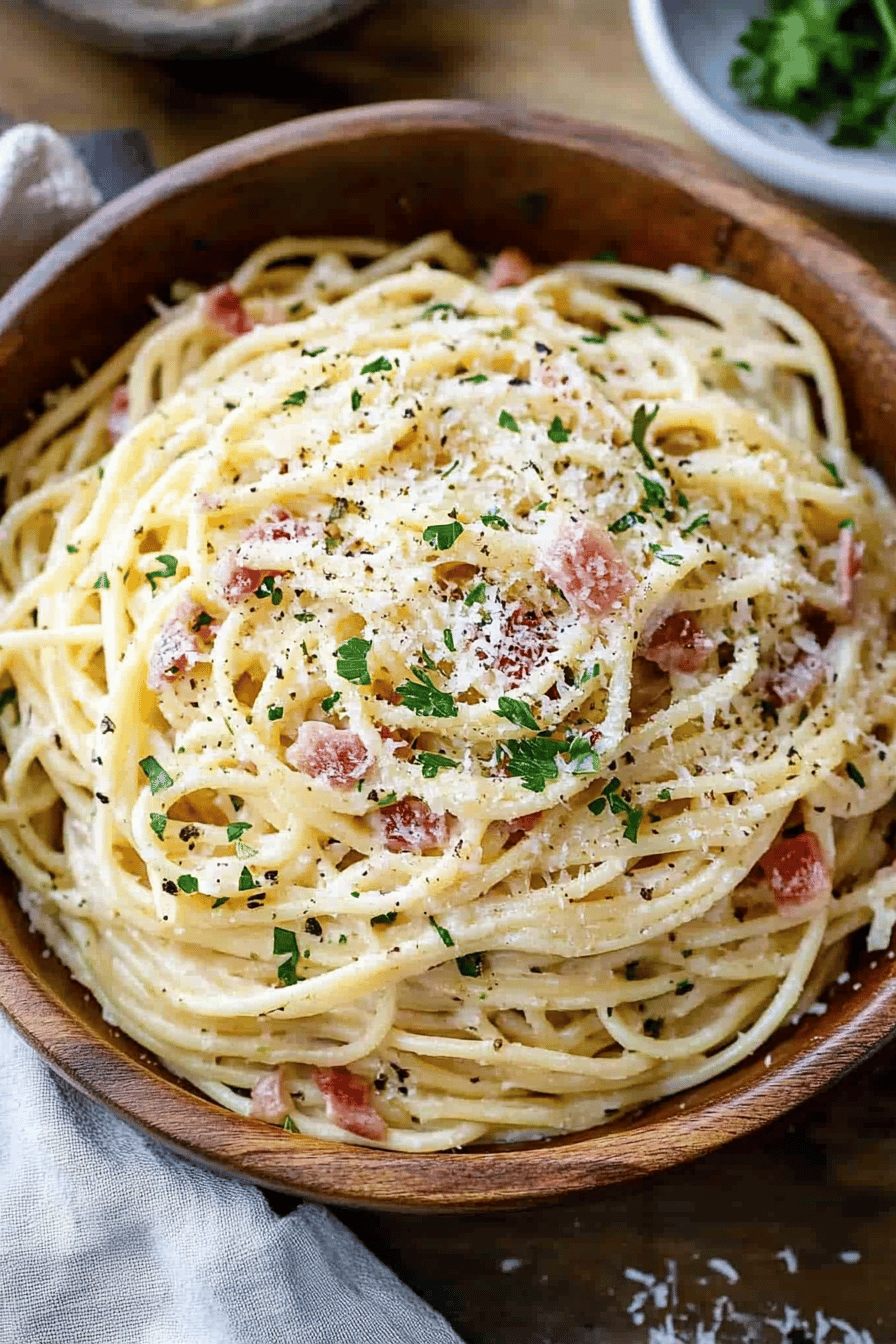
This is the most crucial step for that signature creamy texture. Remove the skillet with the pasta and fat from the heat. This is non-negotiable! If the pan is too hot, you’ll scramble your eggs. Let it cool for about 30 seconds to a minute. Now, pour your egg and cheese mixture over the hot pasta. Immediately start tossing and stirring everything vigorously. As you toss, gradually add a ladleful of your reserved hot pasta water. Keep tossing and adding pasta water, a little at a time, until you achieve a smooth, creamy, emulsified sauce that coats every strand of spaghetti beautifully. It should look glossy and luxurious, not watery or clumpy. The heat from the pasta and the pan will cook the eggs gently, and the starch from the pasta water will bind it all together. Add your crispy guanciale back in and toss one last time.
Step 7: Bake
There is no baking involved in a traditional spaghetti carbonara! This is a stovetop-only dish. The “cooking” of the eggs happens from the residual heat of the pasta and the pan, creating a sauce rather than a baked dish. If you were making something like a Baked Ziti carbonara, then baking would be involved, but for this classic version, we keep it on the stovetop.
Step 8: Cool & Glaze
Similar to baking, there’s no “glaze” in a traditional carbonara. The creamy sauce you create in Step 6 acts as the perfect coating for the pasta. The “glaze” is the glossy, emulsified sauce itself. The key is to get that sauce consistency just right. If it seems too thick, add another splash of pasta water. If it seems too thin, toss it a little longer off the heat to let some moisture evaporate, or add a tiny bit more grated Pecorino.
Step 9: Slice & Serve
Serve immediately! Carbonara waits for no one. Divide the pasta among warm bowls. Garnish with a little extra grated Pecorino Romano cheese and another good grind of black pepper. The aroma alone is enough to make you swoon. It’s best enjoyed piping hot, right off the stove, when the sauce is at its silkiest and the guanciale is still wonderfully crisp.
What to Serve It With
Spaghetti carbonara is such a star on its own, but it can certainly be elevated with the right companions. It’s a fantastic main course, but if you want to build a meal around it, here are some ideas that always get rave reviews in my home:
For Breakfast: Yes, I said breakfast! While not traditional, a small portion of carbonara can be a surprisingly decadent weekend breakfast. Pair it with a strong, dark roast coffee to cut through the richness. A simple side of fresh berries can add a touch of brightness. Presentation-wise, a single perfect portion in a small bowl feels wonderfully indulgent.
For Brunch: This is where carbonara truly shines as a showstopper. Serve it alongside a crisp green salad with a light vinaigrette to balance the richness of the pasta. A crusty baguette for mopping up any extra sauce is always a good idea. For beverages, a crisp prosecco or a light-bodied Italian white wine like a Vermentino pairs beautifully. Think elegant plating – perhaps a small mound of pasta with a few extra guanciale crisps artfully placed on top.
As Dessert: While carbonara is decidedly savory, its satisfying nature means you might not need a heavy dessert. A light, bright fruit sorbet, like lemon or raspberry, can be the perfect palate cleanser. Alternatively, a small serving of biscotti with a Vin Santo for dipping is a classic Italian way to end a meal that started with something savory.
For Cozy Snacks: Sometimes, you just need a comforting bowl of something delicious. A smaller portion of carbonara can be the ultimate cozy snack on a chilly evening. I love pairing it with a good Italian lager or even a glass of red wine if it’s later in the day. It’s the kind of dish that makes a rainy afternoon feel cozy and special. My kids sometimes ask for a “small plate of the yummy pasta” as an afternoon snack, and honestly, it’s one of my favorite things to make for them.
Top Tips for Perfecting Your Spaghetti Carbonara
Over the years, I’ve learned a few tricks and picked up some wisdom from trial and error (mostly error when I first started!). These tips have been game-changers for me, and I hope they help you achieve that perfect carbonara every time.
Guanciale Prep: The key here is slow and steady. Don’t rush the rendering process. Medium-low heat is your friend. You want the fat to melt out gradually, leaving the meat crispy and golden, not burnt and bitter. If you cut the guanciale into uniform lardons, they’ll cook evenly. Make sure to save all that rendered fat – it’s essential for the flavor base.
Mixing Advice: The most critical piece of advice: do NOT cook the egg and cheese mixture over direct heat. The residual heat of the pasta and the pan is enough. Once you add the egg mixture, toss, toss, toss! Keep that pasta moving. If it seems to be clumping, it’s too hot or you’re not moving it enough. Add a little pasta water to help emulsify and cool things down if needed.
Swirl Customization: This isn’t about a literal swirl pattern, but about the way the sauce coats the pasta. You achieve that by vigorously tossing the pasta with the egg and cheese mixture and gradually adding pasta water. Keep tossing until the sauce is creamy and glossy, clinging to every strand. It’s that beautiful, emulsified coating that looks like a swirl on each forkful.
Ingredient Swaps: As I mentioned, guanciale is traditional. If you truly can’t find it, pancetta is the closest substitute. Avoid regular smoked bacon, as the smokiness can overpower the delicate flavors of carbonara. For cheese, Pecorino Romano is king. Its sharp, tangy flavor is distinctive. While Parmesan can be used in a pinch, it won’t have the same authentic bite. If you have a sensitivity to pork, you could theoretically try a very high-quality cured beef, but it won’t be carbonara.
Baking Tips: Again, no baking for this one! Keep it on the stovetop. The magic happens in the skillet, off the direct heat. Pay attention to your pan; some retain heat more than others. If your pan is super hot, let the pasta sit for a full minute before adding the egg mixture. If you’re worried about scrambling, you can even do the final toss in a warmed bowl with a little bit of the pasta water to control the heat more precisely.
Glaze Variations: There’s no separate glaze here. The sauce *is* the glaze. The key is the correct ratio of eggs, cheese, pasta water, and rendered fat. If your sauce is too thick, it means you might need more pasta water. If it’s too thin, you might need a touch more cheese or to let it sit off the heat for a moment longer to thicken. The goal is a luscious, creamy coating that clings beautifully.
Storing and Reheating Tips
Carbonara is truly best enjoyed the moment it’s made. That silky sauce is delicate and can change texture if stored improperly. However, life happens, and sometimes you have leftovers! Here’s how to handle them:
Room Temperature: It’s not recommended to leave carbonara at room temperature for more than two hours. The egg-based sauce can be a breeding ground for bacteria if left out too long. Enjoy it fresh!
Refrigerator Storage: If you have leftovers, let the pasta cool slightly, then transfer it to an airtight container. It’s best to store any leftover crispy guanciale separately. It will keep in the refrigerator for about 1-2 days. The sauce might thicken considerably as it cools.
Freezer Instructions: I generally don’t recommend freezing traditional carbonara. The texture of the egg and cheese sauce can become grainy and separated upon thawing. It’s really a dish best made fresh.
Glaze Timing Advice: Since there’s no separate glaze, this applies to the sauce itself. For the best results when reheating, add a splash of fresh pasta water or even a little milk or cream (though not traditional) when you gently reheat it in a skillet over low heat. This helps to loosen the sauce and bring back some of its creaminess. Don’t reheat in the microwave if you can avoid it, as it can make the pasta rubbery and the sauce watery.
Frequently Asked Questions
Final Thoughts
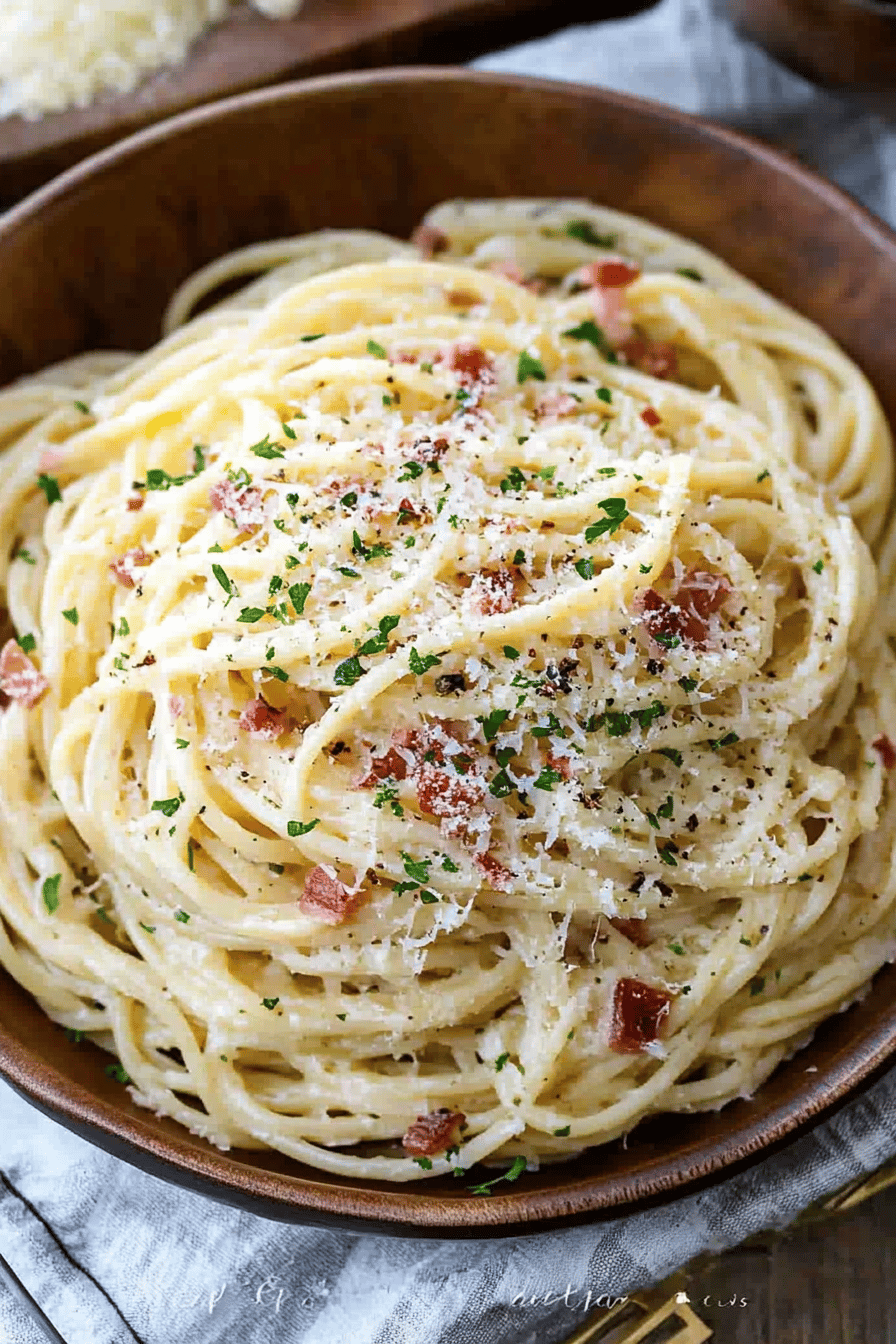
There you have it – my absolute favorite spaghetti Carbonara Recipe! It’s a dish that truly embodies the magic of Italian cooking: simple ingredients transformed into something extraordinary with a little technique and a lot of love. It’s the kind of meal that feels both deeply comforting and incredibly sophisticated, a true crowd-pleaser that never fails to impress. Whether you’re a seasoned cook or just starting out, I promise you, this recipe is worth mastering. It’s a culinary hug in a bowl that will have everyone asking for seconds. If you loved this, you might also enjoy my Cacio e Pepe or my recipe for classic Spaghetti Aglio e Olio for more simple yet delicious Italian pasta dishes. Give this carbonara a try, and I can’t wait to hear how yours turns out! Don’t forget to leave a comment below with your thoughts or any twists you added. Happy cooking!