Mongolian Beef

Okay, so confession time. If there’s one dish that always, *always* makes my family’s eyes light up, it’s this Mongolian Beef. It’s that perfect balance of sweet, savory, and a little bit of tang that just hits all the right notes. You know how some nights you just crave something hearty, something that feels like a hug in a bowl, but you also don’t want to spend hours in the kitchen? This is it. Seriously, I’ve tried so many versions over the years, from takeout favorites to restaurant renditions, and this one, this is the one I keep coming back to. It’s got that irresistible chew, that glossy sauce, and it’s surprisingly simple to whip up. Forget the complicated marinades and the long waiting times; this recipe is all about getting maximum flavor with minimal fuss. It’s the kind of dish that makes you feel like a culinary superhero, even if you’re just making it on a Tuesday night.
What is Mongolian Beef?
So, what exactly is this magical Mongolian Beef we’re talking about? Don’t let the name fool you into thinking it’s some ancient, super-traditional dish from Mongolia itself. Fun fact: it’s actually an American-Chinese invention! Think of it as a stir-fry that captures the best of both worlds. It’s essentially thinly sliced beef, usually flank steak or sirloin, that’s quickly stir-fried and then coated in a wonderfully sticky, savory-sweet sauce. The sauce is where all the magic happens – it’s typically a rich blend of soy sauce, a touch of sweetness (hello, Brown Sugar!), garlic, ginger, and often a little bit of cornstarch to get that beautiful glossy finish. It’s less about authenticity and more about pure, unadulterated deliciousness that appeals to pretty much everyone. It’s that comforting, slightly decadent flavor profile that keeps people coming back for more, and honestly, it’s just plain fun to say.
Why you’ll love this recipe?
There are so many reasons why this Mongolian Beef recipe has become an absolute staple in my kitchen, and I’m pretty sure it’s going to win a permanent spot in yours too. First off, let’s talk about the flavor. It’s honestly out of this world! You get that deep, savory umami from the soy sauce, a hint of sweetness that’s just right (not cloying at all!), and then that wonderful kick from the garlic and ginger. It’s a flavor explosion that’s seriously addictive. But it’s not just about the taste; it’s also incredibly easy to make. I know stir-fries can sometimes seem intimidating, but this one is surprisingly forgiving. The steps are straightforward, and you can have a restaurant-quality meal on your table in under 40 minutes. That’s a weeknight win right there! And the ingredients? Totally budget-friendly. You don’t need anything fancy or hard to find. Most of it is probably already in your pantry or fridge. Plus, it’s super versatile. You can serve it over rice, noodles, or even with a side of steamed veggies. What I love most about this particular recipe is how it perfectly mimics that irresistible takeout flavor without all the extra sodium or MSG. It’s a healthier, yet equally delicious, alternative that my whole family devours. Honestly, it’s the kind of dish that makes me feel good about what I’m serving, and that’s a huge win in my book.
How do you make Mongolian Beef?
Quick Overview
This recipe is all about getting that perfect tender beef and a luscious, glossy sauce in a flash. We’ll start by slicing the beef super thin, giving it a quick coating to keep it tender, and then stir-frying it until it’s just cooked through. The sauce is a simple mix of pantry staples that comes together in minutes. Once the beef is cooked, we’ll toss it all together to coat every single bite in that glorious sauce. The key is high heat and quick cooking to get that signature texture and flavor. It’s a fast, straightforward process that delivers impressive results every single time.
Ingredients
For the Main Batter:
You’ll need about 1 pound of beef, and I always go for flank steak or sirloin. The trick to tender beef is to slice it thinly against the grain. Seriously, don’t skip this step! It makes a world of difference. For the coating, you’ll want 2 tablespoons of soy sauce (use a good quality one!), 1 tablespoon of Shaoxing wine or dry sherry if you have it (it adds a subtle depth, but water works in a pinch), 1 teaspoon of cornstarch, and a pinch of Black Pepper. This coating might seem simple, but it’s crucial for keeping the beef incredibly tender and helping it soak up all that amazing sauce.
For the Filling:
This is where we build our flavor base. You’ll need 2-3 cloves of garlic, minced fine. I’m also a big fan of ginger, so I use about a 1-inch piece, also minced. If you’re not a huge ginger person, you can dial it back a bit, but I think it adds a wonderful warmth. You’ll also want some sliced green onions – the white and light green parts are great for stir-frying, and save the dark green tops for garnish later. A little bit of neutral oil, like vegetable or canola oil, is perfect for stir-frying; you’ll need about 2-3 tablespoons.
For the Glaze:
This is the star of the show! For the sauce, you’ll need 1/2 cup of soy sauce (again, good quality makes a difference!), 1/4 cup of beef broth (or water if you don’t have it), 2 tablespoons of Brown Sugar (this is key for that lovely sweetness and caramelization), 1 tablespoon of oyster sauce (this adds a fantastic depth of flavor, but you can omit it if you need to), and 1 teaspoon of cornstarch mixed with 2 teaspoons of water to make a slurry. This slurry is what’s going to give our sauce that beautiful, thick, glossy consistency that clings to the beef.
Step-by-Step Instructions
Step 1: Preheat & Prep Pan
Alright, first things first, let’s get our pan ready. You want to use a wok or a large, heavy-bottomed skillet. Place it over medium-high heat and let it get nice and hot. Add about 1 tablespoon of your neutral oil and swirl it around. We want that pan smoking just a little bit – that’s how you get that perfect sear on the beef. Don’t overcrowd the pan; we’re going to cook the beef in batches if necessary, so everything gets beautifully browned, not steamed. I usually make sure all my ingredients are prepped and within easy reach before I even turn on the stove because this stir-fry moves fast!
Step 2: Mix Dry Ingredients
In a medium bowl, combine your thinly sliced beef with the soy sauce, Shaoxing wine (or water), cornstarch, and Black Pepper. Give it a good toss with your hands or a spatula until every piece of beef is lightly coated. You want it to look a little pasty. This isn’t a heavy batter; it’s more of a light coating that locks in moisture and gives the beef a nice texture when it hits that hot pan. Let this marinate for at least 10 minutes while you prepare the sauce. The cornstarch is your best friend here for ensuring tenderness.
Step 3: Mix Wet Ingredients
In a separate small bowl, whisk together the soy sauce, beef broth (or water), brown sugar, and oyster sauce (if using) for the glaze. Make sure the brown sugar is fully dissolved. In a tiny separate bowl or cup, whisk together the cornstarch and water to create your slurry. Keep these separate for now; we’ll add them at just the right moment.
Step 4: Combine
Now for the cooking! Add another tablespoon of oil to your hot wok or skillet. Once it’s shimmering, add the marinated beef in a single layer. You might need to do this in two batches so you don’t crowd the pan. Cook for about 1-2 minutes per side, until nicely browned and just cooked through. Don’t overcook it here; it will cook a little more in the sauce. Remove the beef from the pan and set it aside on a plate. Don’t worry about any browned bits stuck to the pan – that’s pure flavor!
Step 5: Prepare Filling
Lower the heat slightly to medium. Add a little more oil if the pan looks dry. Toss in your minced garlic and ginger and stir-fry for about 30 seconds until fragrant. Be careful not to burn the garlic! Then, add the white and light green parts of your sliced green onions and stir-fry for another 30 seconds. You just want them to soften slightly and release their aroma.
Step 6: Layer & Swirl
Pour the soy sauce mixture (the glaze base) into the pan with the garlic, ginger, and green onions. Bring it to a simmer, stirring constantly. Now, give your cornstarch slurry a quick stir and slowly pour it into the simmering sauce while whisking continuously. The sauce will thicken up beautifully in about 30 seconds to a minute, becoming lovely and glossy. This is the moment of truth! Add the cooked beef back into the pan along with any juices that have accumulated on the plate. Toss everything together gently to coat every piece of beef in that luscious sauce. It should look glossy and inviting!
Step 7: Bake
No baking required for this dish! It’s all done on the stovetop. The “baking” is really just the quick stir-fry and sauce thickening process that cooks everything through beautifully.
Step 8: Cool & Glaze
The sauce itself acts as the glaze here. As soon as the beef is coated and the sauce is thickened, it’s ready to go. You don’t want to let it sit too long in the pan after this, or the beef might get a bit too soft. The magic happens right when it comes off the heat!
Step 9: Slice & Serve
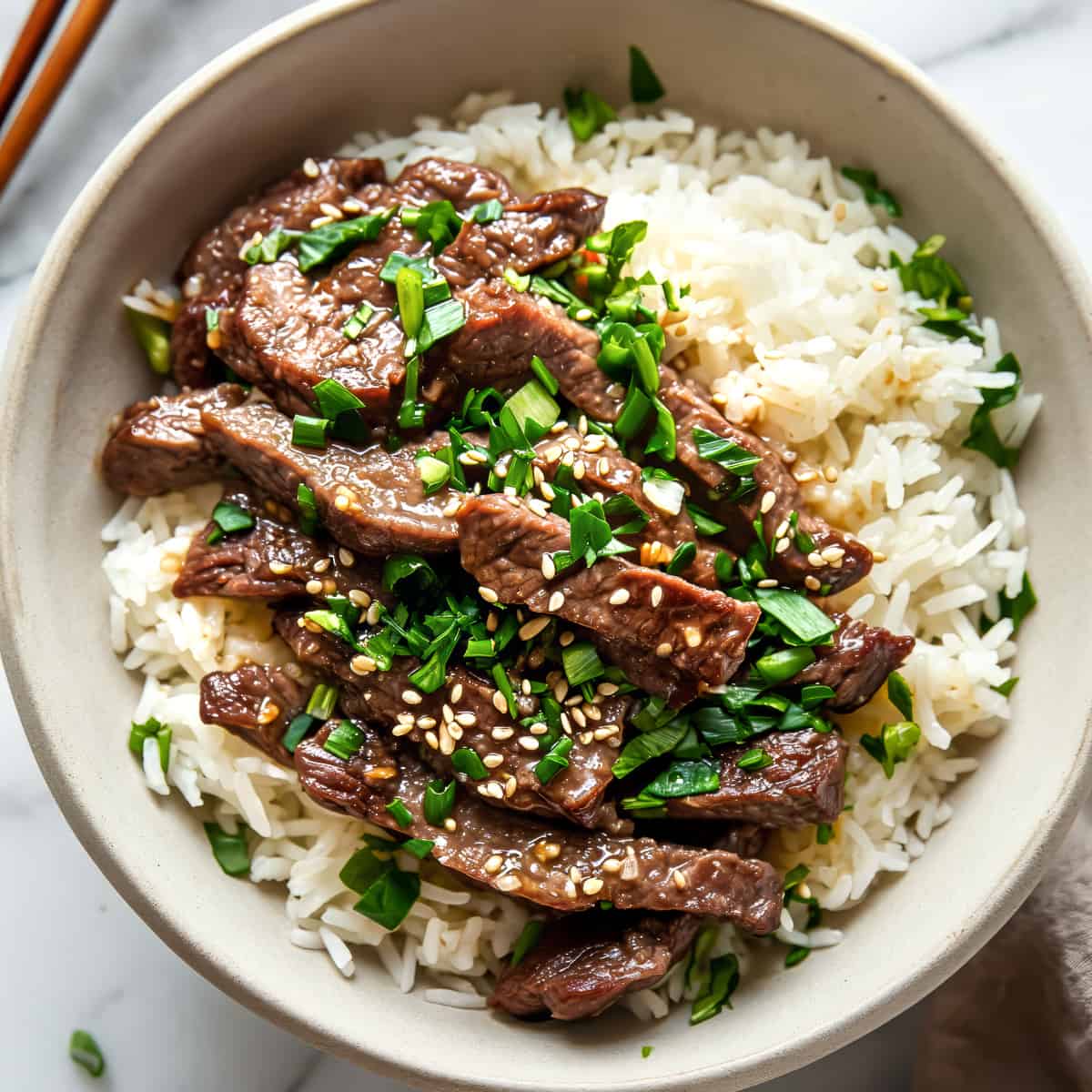
This Mongolian Beef is best served immediately while it’s hot and the sauce is perfectly glossy. Garnish generously with the reserved dark green parts of the green onions. It looks so appealing with those vibrant green tops! Serve it piping hot over fluffy steamed white rice. The rice is perfect for soaking up every last drop of that incredible sauce. Honestly, the aroma that fills your kitchen at this stage is just heavenly. It’s that perfect combination of sweet, savory, and slightly spicy that makes your taste buds sing.
What to Serve It With
This Mongolian Beef is seriously a chameleon when it comes to pairings! For a classic, comforting breakfast (yes, I’m one of those people!), a small portion served over a bed of perfectly steamed white rice with a sprinkle of those green onions is pure bliss. It’s hearty and satisfying to start the day. For brunch, I love to elevate it a bit. Think of serving it alongside some fluffy Scrambled Eggs or a simple side salad with a light vinaigrette. It feels a bit more sophisticated. As a dessert? Well, this is more of a main course, but if you were thinking of something sweet *after* dinner, you could always have a small, intensely flavored bite of this. My personal favorite, though, is for cozy snacks or a quick weeknight dinner. It’s absolutely perfect served over fluffy steamed jasmine rice, letting that glorious sauce soak in. I’ve also tried it with some perfectly cooked udon noodles, and it’s divine – the noodles really hold onto that sauce beautifully. Another family favorite is to serve it alongside some crisp, steamed broccoli or bok choy for a nice balance of textures and a pop of green. It really is a dish that makes any meal feel a little special, no matter how simple the occasion.
Top Tips for Perfecting Your Mongolian Beef
I’ve learned a few tricks over the years of making this dish countless times, and I’m happy to share them with you so you can achieve Mongolian Beef perfection at home! For the beef prep, slicing it thinly against the grain is NON-NEGOTIABLE. Seriously, it’s the single most important step for tender beef. Freeze your steak for about 20-30 minutes before slicing; it firms it up and makes it so much easier to get those thin, uniform slices. When mixing your coating, don’t be afraid to really get in there with your hands to ensure every piece is coated. For the stir-frying itself, high heat is your friend, but don’t overcrowd the pan. Cook in batches if you have to. This ensures you get that beautiful sear instead of steaming the meat. When it comes to the sauce, taste and adjust! Does it need more sweetness? Add a touch more brown sugar. Too salty? A splash more broth or water. The cornstarch slurry is key for that glossy finish, but make sure to whisk it in gradually and continuously so you don’t get lumps and it thickens evenly. I’ve learned that sometimes the oyster sauce can be a bit overpowering if you use too much, so start with the recommended amount and see how you like it. If you want to mix up the flavor profile, try adding a teaspoon of chili garlic sauce or a pinch of red pepper flakes to the glaze for a little heat. For the green onions, I always separate the whites and greens. The whites go in with the aromatics to soften and add flavor, while the greens are reserved for garnish to give a fresh, vibrant finish and a lovely pop of color. Don’t be afraid to experiment with different types of soy sauce, either – a mix of regular and low-sodium can give you a more complex flavor. And remember, this dish is best enjoyed right after it’s made. The sauce can thicken up too much if it sits for too long, so plan to serve it fresh off the stove!
Storing and Reheating Tips
This Mongolian Beef is so good, you’ll likely want to savor every bite, and thankfully, it stores and reheats beautifully. If you have any leftovers (which is rare in my house!), let the dish cool down completely before storing. At room temperature, I wouldn’t leave it out for more than about two hours, especially if your kitchen is warm. For refrigerator storage, transfer the cooled beef and sauce into an airtight container. It should stay fresh and delicious in the fridge for up to 3 days. The sauce might thicken a bit more as it cools, which is perfectly normal. When it comes to freezer instructions, this dish freezes surprisingly well! Wrap individual portions tightly in plastic wrap, then place them in a freezer-safe bag or container. It can stay frozen for up to 2 months. For reheating, the best method is on the stovetop. Gently reheat the leftovers in a skillet over medium-low heat, stirring occasionally. You might need to add a splash of water or beef broth to loosen the sauce and bring it back to its former glossy glory. If you’re reheating from frozen, let it thaw in the refrigerator overnight first. Microwaving is also an option for a quick reheat; just be sure to cover it and stir halfway through to ensure even heating. For the glaze timing, if you’re storing it as is, the sauce will have already done its job. If you’re freezing, the sauce will solidify somewhat but will reconstitute nicely upon reheating. The key is to not overcook it when reheating, as the beef can become tough if cooked for too long again.
Frequently Asked Questions
Final Thoughts
There you have it – my go-to recipe for the most incredible Mongolian Beef! I really hope you give this one a try. It’s become such a beloved recipe in my home because it delivers big on flavor without demanding hours in the kitchen. It’s that perfect blend of savory, sweet, and that irresistible sticky texture that always leaves everyone asking for seconds. If you love this, you might also enjoy my recipe for Honey Garlic Chicken or my Easy Orange Chicken – they’re in a similar vein of deliciously accessible Asian-inspired flavors! I’m genuinely excited for you to experience this yourself. The aroma alone as it cooks is enough to make your stomach rumble, and the taste? Pure satisfaction. I can’t wait to hear what you think, so please drop a comment below to let me know how yours turned out, or share any fun variations you tried! Happy cooking!